Networking & Grants
SERA Project
Contract SERA nr. 016873; Program Specific Support Action: Strengthening the European Research Area by Reinforcement of Romanian Research Competency in Genomics and Proteomics of Major Global Risk Diseases: Atherosclerosis, Diabetes and its Complications (2005-2007).
Participant: The single contractor of SERA was the Institute of Cellular Biology and Pathology “Nicolae Simionescu” (ICBP), Bucharest, Romania. Website: www.icbp.ro.
 1. Project execution
The fundamental concept of the SERA project was to act as a support for the reinforcement of our biomedical research (focussed on cardiovascular diseases, diabetes, obesity, aging) and to integrate, corroborate and assess our results with those of European research groups. In addition we aimed to strengthen collaborations with researchers from Romania, MS and ACCs, to become active participants to the EC-FPs and thus to amplify the contribution of the Romanian science to European Research Area (ERA).
The goals of the SERA project were (1) to support and improve the S&T potential and the research activity of ICBP, “Centre of Excellence” of the EC; (2) to participate actively to the development of research at national and regional level; (3) to attract students to a scientific carrier offering opportunities for the education of the new generation of investigators in the European spirit; (4) to strengthen ongoing collaborations and create the conditions for new cooperations with European research centres; (5) to expand the collaborations with SMEs for better exploitation of the results; (6) to speed up the two-way transfer of knowledge between basic and clinical research for the benefit of the modern medicine. Together, all these activities were intended to lead to improved science, intensify the participation of ICBP in EC-FPs, and add value to ERA.
The strategic objectives were: to increase the institutional and national research competence of ICBP in cell and molecular biology, genomics and proteomics, and become a significant centre in the ERA (objective 1); to boost the networking with European Centres and enhance participation to EC-FPs (objective 2); to increase the local job and career opportunities for young researchers (objective 3) and to extend the scale and scope of the Centre activities to better serve the social and economic environment (objective 4).
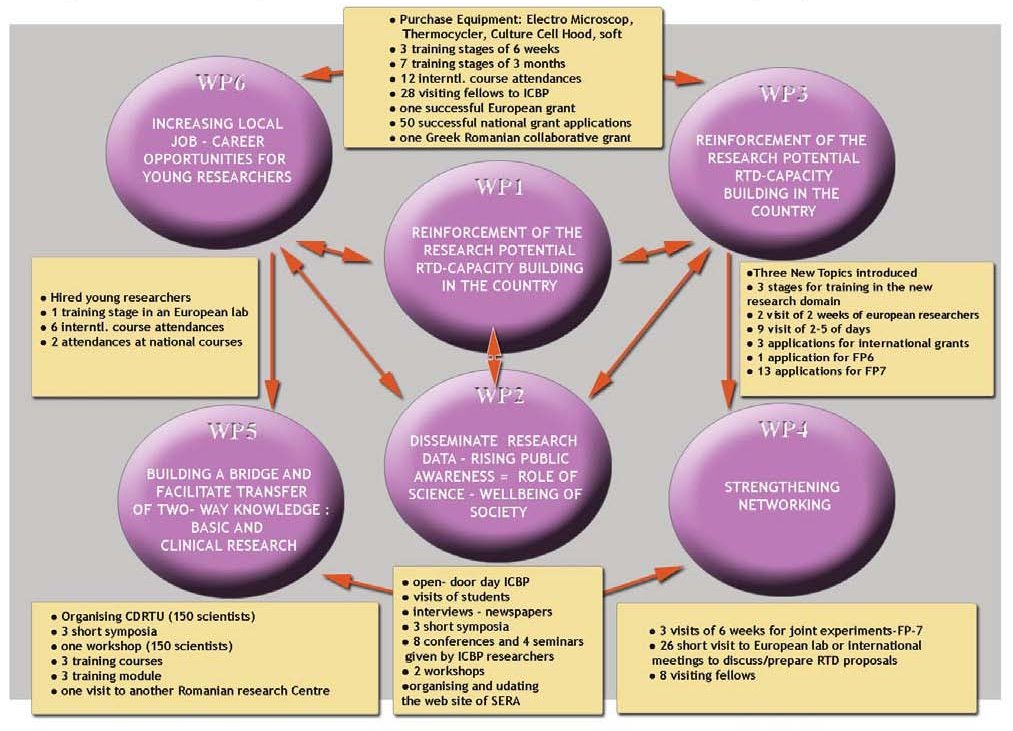
Our objectives and their operational goals were organised in six interrelated workpackages (WP) organised in such a way that the accomplishments in one WP help the activities and the events of the other WPs. The designation of each WP and a brief summary of the work performed in each WP are shown in the diagram (next page).
The work performed within SERA had an ascending course.
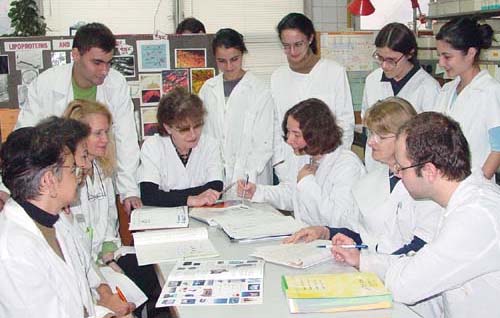 First, to increase the research competence of our team we manage to improve our technological capabilities by renewal of some key equipment and modernizing some apparatus. This was done in parallel with the intensification of the scientific life in the Institute by increasing the number of laboratory meetings, journal clubs, and progress reports.
To the same purpose from the beginning of the SERA project, we increased the number of our research team by hiring new young investigators. After a careful selection most of these young investigators supported from SERA funds, proved to be talented, enthusiastic and promising future scientists. This led to a 10 % increase of the number of researchers working in ICBP.
That was in line with our desire to attract more young people to science, increase the job opportunities and maybe in the future, to convince them that, by keeping close contacts with European scientists, they can have a decent scientific career in Romania (WP6).
A major preoccupation was to strengthen the ongoing collaborations and to establish new co-operations with specialists from MSs and ACCs being aware that this is the way to improve our scientific record and to participate in networking for EC-FP. To this purpose, during the project, numerous young investigators worked and performed joint experiments in European laboratories employing technologies that we planned to introduce in our research and improving their technological skills (WP3). In addition, 26 established researchers from ICBP went for short visits to European laboratories to discuss and to prepare new RTD proposals (WP4).
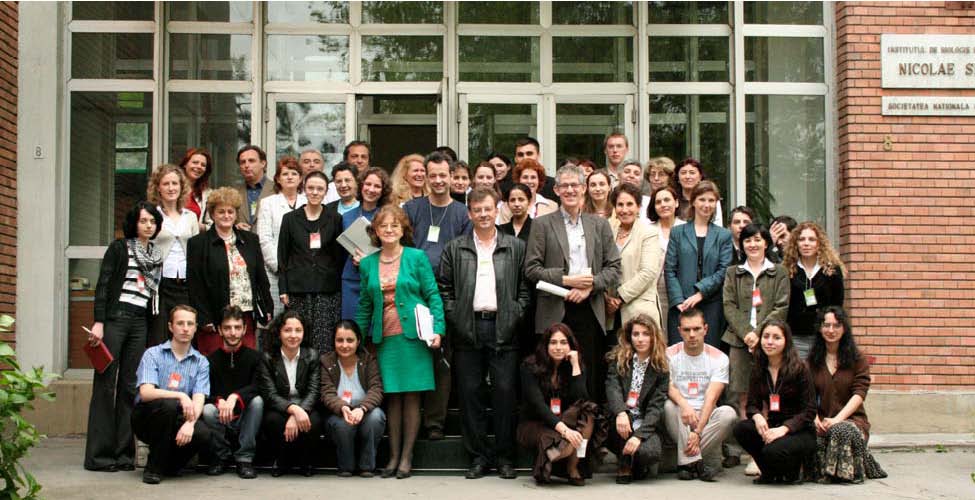
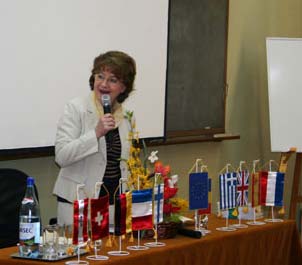
On the same line of activity and having as aim to strengthen national and European networking, we invited outstanding scientists from MSs and ACCs to visit and give lectures in the institute so as to expose the entire Romanian scientific community to the last scientific discoveries. The organised symposia were opportunities for Romanian scientists to present and assess their results, to measure at the European scale the achievements and drawbacks (WP1, WP2). 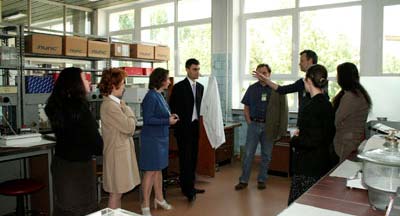 Thus, in the 42 months of SERA, we have organised six one-day symposia and three workshops in the institute attended by invited speakers from EU countries and scientists, PhD students, postdoctoral fellows from ICBP and from the entire country. Based on the excellent feed-back received from all participants, we consider these meetings as a real success because of the high scientific level, the ample time used for intense discussions, and the friendly atmosphere in the frame of which future collaborations on common projects were established aiming to networking in FP7 (WP2, WP4, WP5). Moreover, researchers from ICBP were invited to present their results in European laboratories or to European meetings (WP2).
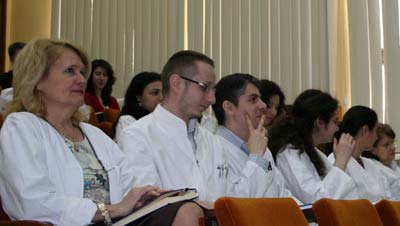
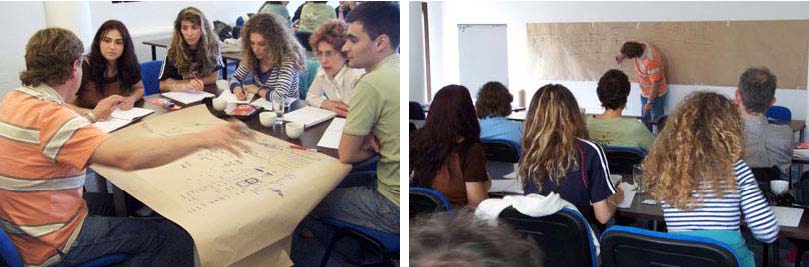
One of the main successful achievements of SERA was the organisation in the first year of the international “Cardio-Diabetology research reports and training unit” (CDRTU) as a platform for transfer of knowledge “from bench to bedside”, communication and discussions on an informal basis of the problems stemming from cross-border activities – basic and clinical research (WP5). The activities of this unit pursue two major directions: (1) the dissemination of information and result reports, and (2) training activities. The inaugural workshop of CDRTU settled and made known the objectives and the rules of CDRTU to the 150 participants. All basic and clinical researchers applauded the idea. It was the start of a much-needed communication between scientists and clinicians that continued throughout the SERA project. In the frame of CDRTU, scientists from ICBP were invited to lecture to meetings on atherosclerosis and/or diabetes and to discuss recent results obtained in the attempt to retard/reduce these diseases (round tables). As a second direction of CDRTU, an important activity was the yearly organization of the “Advanced Study School” attended by ~50 researchers, medical residents, students, PhDs and clinicians. The course and the laboratory exercises were highly appreciated by all the participants that consider the activity as “excellent”.
 To extend the scale and scope of our activities and broaden and diversify the R&D in ICBP, we introduced (as planned) three new research topics that started in the first year of SERA and were developed during the whole period of the project. The new topics were in good agreement to the national and EC FP goals: brain research, angiogenesis and functional genomics in diabetes and obesity.
As a consequence of the improved research conditions in the Institute and the boost of scientific activities during the SERA project, 51 scientific papers were published in peer review journals, and several articles in national journals.
In addition, the increased level of research made us more competitive and during the 42 months of the project, the researchers from the Centre obtained 50 National Grants (from the Romanian Academy and the Ministry of Education and Research). It is worth mentioning that several of theses grants are collaborative projects. One international collaborative project in the framework of Romania-Greece bilateral co-operation program was funded for 2 years. Also, during this period, the researchers from ICBP applied for thirteen international grants in the frame of FP6 and FP7, one of which was financed in 2008 and three are in the process of evaluation.
As planned, the successful researchers in grant applications and publications were rewarded financially from the SERA project (all these activities were part of the WP1 and WP5 work plan).
Dissemination and exploitation of the research results was an important goal of SERA. Besides exposing our results to European scientists during workshops, symposia and short visits, we made contacts with national SMEs, discussed possible exploitation of our research data, and invited their representatives to the CDRTU activities. They participated to the opening workshop of CDRTU and we made one collaborative grant application that was funded in the second year of SERA (WP1, WP2, and WP5).
The management activity of the project was well balanced, harmonious, dynamic, and flexible. There were no major problems to be solved, and no disparity between the members of the Management Board; the entire project work plan was successfully completed, and no major deviations were recorded. All the deliverables planned were 100% accomplished.
Moreover, besides the planned activities, a number of actions were done without the SERA financial support, but the umbrella of SERA was helpful and gratifying. As examples, the three Advanced Training Courses, the participation to the Annual Sessions of the Romanian Society for Cell Biology, the visit of lecturers from Tel Aviv University, Israel, a small symposium organised in ICBP with directors of the COST-Action, a large participation at national and international scientific meetings, each event creating additional opportunities to present our achievements in the SERA project.
An important contribution to the successes of our activities had the good infrastructure of ICBP: the 150 seats auditorium, the laboratory space (for training activities), the library, the Internet, Intranet, meeting rooms, the areas for poster presentations, cafeteria.
2. Dissemination and use
Dissemination of the SERA project was achieved by presentations of the project on the page dedicated to SERA on ICBP website, presentations to the press, in the monthly journal of the Romanian Academy and radio interviews. A special occasion was an article-interview with Dr. Maya Simionescu that appeared in a scientific journal with a large readership “Circulation” section “European Perspective in Cardiology” (Aug 2008; 118: f37 - f42) in which she emphasized that the Institute was selected “Centre of Excellence” of the EC (2000) and in 2005 within the frame of EC- SSA was awarded the important SERA project.
Another opportunity for publicizing the SERA achievements was the annual “open door day” of ICBP (April 4, 2006, April 6, 2007, and April 7, 2008). High school and University students and the general public that visited the Institute were exposed to general presentations on the role of research for the wellbeing of the society, in general, and the support of the European Community for the development of research and creation of ERA, in particular.
We believe that the impact of SERA will go well beyond the time of the project. Being better trained and employing up to date equipment, the research sector will definitely improve and expand and the results that we and others will obtain in deciphering the cellular and molecular causes of major diseases that affect the modern society will have a direct impact on the societal needs and rights for better health.
Conclusion and end-results. The ICBP research team (55 researchers, ~ 55% under 35 years old, and ~70% women) took full advantage of the opportunities created by the SERA project. By careful and good management of the opportunities and the funds of the project, we improved our technology, hired new young researchers, were able to bring to ICBP numerous outstanding lecturer from Europe, our established researchers attended excellent meetings, the young scientists worked in famous European laboratories, learned novel techniques and performed joint experiments. New lines of research and fruitful collaborations were generated and thirteen applications, either as coordinators or participants to FP7 were submitted.

Our initial goals were fulfilled and all objectives and tasks proposed were successfully completed. The implementation of the SERA objectives constituted a major support for our research activity, and contributed significantly to the national, regional and European extension of the role of the Institute as centre of excellence in cardiovascular research, diabetes, obesity, ageing, scientific areas that are part of the thematic priority 1 of the FP7.
For our centre and our team, the SERA project created a solid base for the future development of the research activities: an improved infrastructure, an enlarged research team, a diversified research programme, an increased visibility, and an enhanced capacity of collaboration with national and European partners. It was a big step forward, much needed for the advancement of science and for our integration in the ERA.
 Coordinator contact details: Dr. Maya Simionescu: Institute of Cellular Biology and Pathology “Nicolae Simionescu” 8 B.P. Hasdeu Street, sector 5, 050568 Bucharest, Romania Tel.: 00 40 21 319 45 18, Fax: 00 40 21 319 45 19 e-mail: maya.simionescu@icbp.ro